

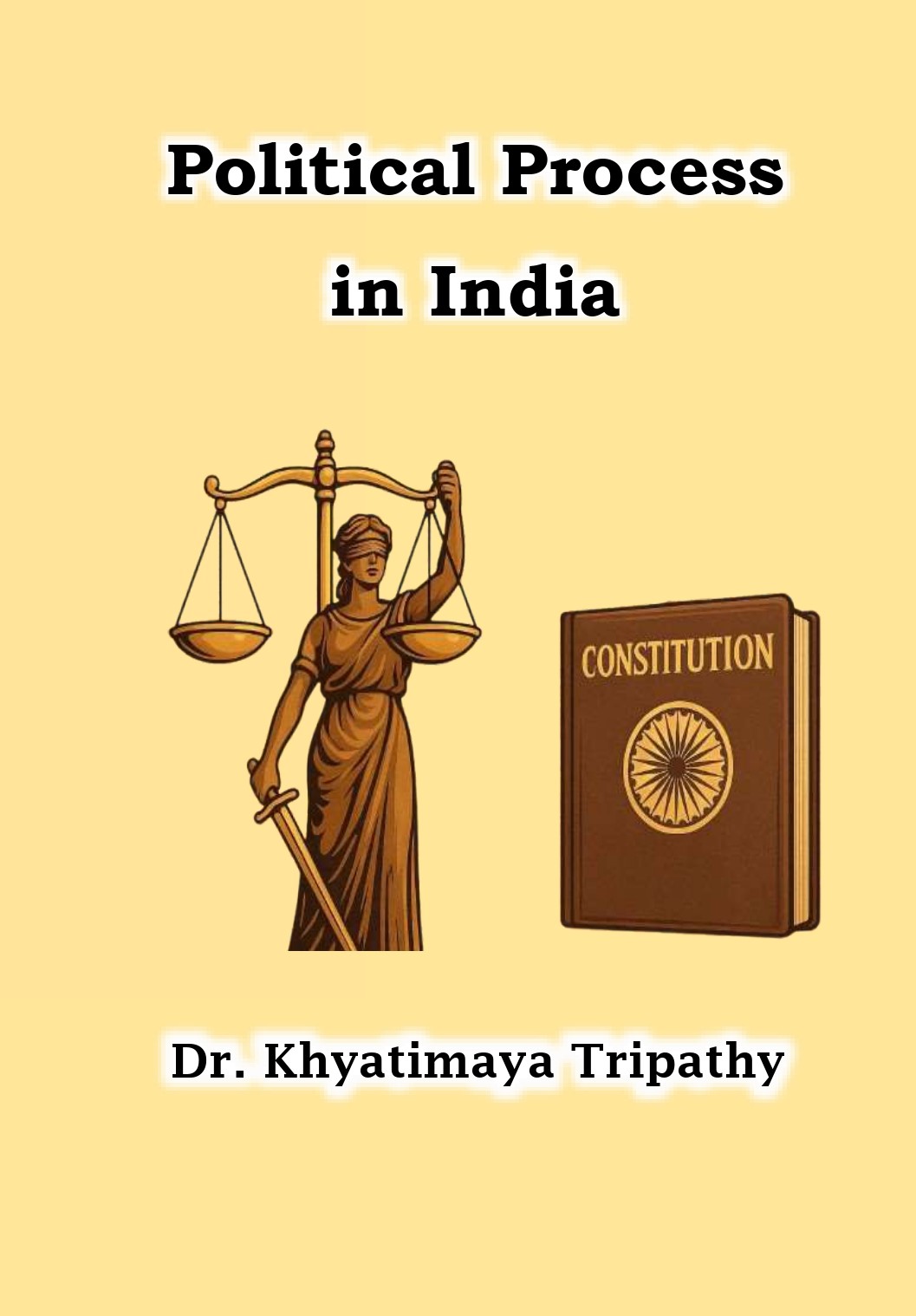
Political Process in India by Dr. Khyatimaya Tripathy
Original price was: ₹349.00.₹49.00Current price is: ₹49.00.
The study of political processes in India occupies a central place in the discipline of Political Science, particularly at the undergraduate level where students are introduced to the dynamic functioning of democracy in one of the world’s most diverse societies. This book, Political Process in India, has been carefully designed to provide a comprehensive, analytical, and accessible understanding of the structures, institutions, and forces that shape Indian politics.
India’s political system is unique in its scale, diversity, and complexity. Since independence, it has evolved through multiple phases from the dominance of a single party to the emergence of a competitive multi-party system, the rise of coalition politics, and the increasing significance of regional and identity-based political formations. These transformations reflect deeper socio-economic changes and the continuous negotiation between unity and diversity within the framework of a democratic Constitution.
This book seeks to capture these evolving dynamics by systematically organizing key themes into four units. The first unit examines the Indian party system, tracing its historical evolution and analysing contemporary trends such as coalition politics, regional parties, and the role of opposition. The second unit focuses on electoral politics and voting behaviour, highlighting the factors that influence democratic participation in India. The third unit explores regionalism and identity politics, shedding light on how linguistic, cultural, and regional aspirations interact with the federal structure. The final unit engages with critical issues of caste, secularism, and public policy, emphasizing their role in shaping political discourse and governance.
An effort has been made to present the subject matter in a clear and student-friendly manner while maintaining academic rigour. The chapters incorporate theoretical perspectives, empirical examples, and contemporary developments to enable students to develop both conceptual clarity and critical thinking. This book is particularly aligned with the needs of undergraduate learners, competitive examination aspirants, and anyone interested in understanding the functioning of Indian democracy.
The objective of this work is not merely to provide information but to encourage inquiry, reflection, and informed engagement with political realities. In a rapidly changing political environment, it is essential for students to develop a nuanced understanding of democratic processes, institutions, and challenges. It is hoped that this book will serve as a valuable resource in that intellectual journey.
I would like to express my sincere gratitude to all those scholars, authors, and institutions whose works have contributed to the development of this book.
Description
The study of political processes in India occupies a central place in the discipline of Political Science, particularly at the undergraduate level where students are introduced to the dynamic functioning of democracy in one of the world’s most diverse societies. This book, Political Process in India, has been carefully designed to provide a comprehensive, analytical, and accessible understanding of the structures, institutions, and forces that shape Indian politics.
India’s political system is unique in its scale, diversity, and complexity. Since independence, it has evolved through multiple phases from the dominance of a single party to the emergence of a competitive multi-party system, the rise of coalition politics, and the increasing significance of regional and identity-based political formations. These transformations reflect deeper socio-economic changes and the continuous negotiation between unity and diversity within the framework of a democratic Constitution.
This book seeks to capture these evolving dynamics by systematically organizing key themes into four units. The first unit examines the Indian party system, tracing its historical evolution and analysing contemporary trends such as coalition politics, regional parties, and the role of opposition. The second unit focuses on electoral politics and voting behaviour, highlighting the factors that influence democratic participation in India. The third unit explores regionalism and identity politics, shedding light on how linguistic, cultural, and regional aspirations interact with the federal structure. The final unit engages with critical issues of caste, secularism, and public policy, emphasizing their role in shaping political discourse and governance.
An effort has been made to present the subject matter in a clear and student-friendly manner while maintaining academic rigour. The chapters incorporate theoretical perspectives, empirical examples, and contemporary developments to enable students to develop both conceptual clarity and critical thinking. This book is particularly aligned with the needs of undergraduate learners, competitive examination aspirants, and anyone interested in understanding the functioning of Indian democracy.
The objective of this work is not merely to provide information but to encourage inquiry, reflection, and informed engagement with political realities. In a rapidly changing political environment, it is essential for students to develop a nuanced understanding of democratic processes, institutions, and challenges. It is hoped that this book will serve as a valuable resource in that intellectual journey.
I would like to express my sincere gratitude to all those scholars, authors, and institutions whose works have contributed to the development of this book.
Related products
-
Sale!
Debates in Contemporary Political Theory by Dr. K. Tripathy
Original price was: ₹499.00.₹49.00Current price is: ₹49.00. Add to basket -
Sale!

Viksit Bharat: Issues, Challenges & Opportunities
Original price was: ₹599.00.₹199.00Current price is: ₹199.00. Add to basket -
Sale!

Kishor Nyayaboard Ki Karyapranali Wa Chunautiyan By Dr. Sanjeev Gangwar
Original price was: ₹99.00.₹49.00Current price is: ₹49.00. Add to basket -
Sale!
India’s foreign policy emerging trends & Challenges By Dr. Aashish Kumar Bariyar
Original price was: ₹1,199.00.₹399.00Current price is: ₹399.00. Add to basket
Reviews
There are no reviews yet.