

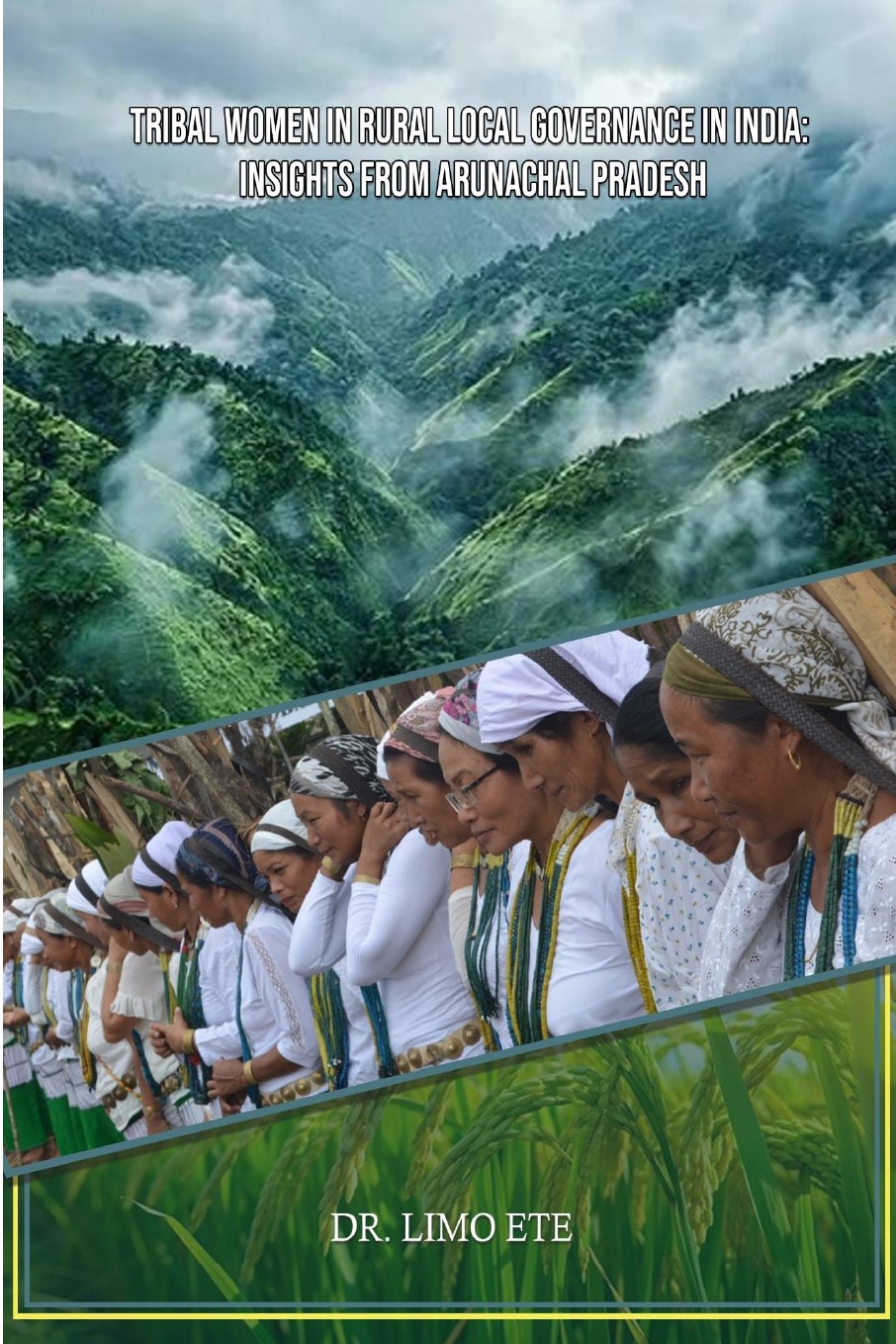
Tribal Women in Rural Local Governance in India: Insights From Arunachal Pradesh By Dr. Limo Ete
Original price was: ₹899.00.₹199.00Current price is: ₹199.00.
The quality of any democracy is measured not merely by the conduct of elections but by the inclusiveness of participation in its decision-making processes. Women, who constitute nearly half of the population, remain under-represented in political institutions across the world. In India, despite constitutional guarantees of equality and progressive reforms such as the 73rd Constitutional Amendment Act (1992), the gap between formal rights and substantive participation persists particularly in tribal and geographically remote regions.
This book, Tribal Women in Rural Local Governance in India: Insights from Arunachal Pradesh, examines this gap within the distinctive socio-cultural and political context of Arunachal Pradesh. The state’s history as the former North East Frontier Agency (NEFA), its rich tribal diversity, and its strong customary institutions create a unique setting in which traditional authority structures coexist with modern democratic frameworks. Within this landscape, the experiences of tribal women in grassroots governance merit careful and systematic study.
Focusing primarily on the West Siang district and the Galo tribe, this work explores the extent and nature of women’s participation in Panchayati Raj Institutions and local governance structures. While statutory reservations have opened institutional spaces for women, entrenched patriarchal norms, customary inheritance practices, and socio-economic constraints continue to shape their political engagement. At the same time, increasing access to education, administrative reforms, and growing awareness of rights are gradually transforming women’s roles in public life.
The study analyses patterns of participation at different tiers of local governance, identifies structural and cultural factors influencing engagement, and situates the findings within broader theoretical debates on democracy, decentralisation, and gender empowerment. It argues that meaningful empowerment requires more than numerical representation; it demands agency, capacity, social legitimacy, and supportive institutional mechanisms.
By documenting the realities of tribal women’s political participation in Arunachal Pradesh, this book seeks to contribute to academic scholarship, inform policy discourse, and encourage inclusive governance practices. The journey toward gender-just democracy in tribal India is ongoing, and this work is offered as a modest contribution to that larger endeavour.
Description
The quality of any democracy is measured not merely by the conduct of elections but by the inclusiveness of participation in its decision-making processes. Women, who constitute nearly half of the population, remain under-represented in political institutions across the world. In India, despite constitutional guarantees of equality and progressive reforms such as the 73rd Constitutional Amendment Act (1992), the gap between formal rights and substantive participation persists particularly in tribal and geographically remote regions.
This book, Tribal Women in Rural Local Governance in India: Insights from Arunachal Pradesh, examines this gap within the distinctive socio-cultural and political context of Arunachal Pradesh. The state’s history as the former North East Frontier Agency (NEFA), its rich tribal diversity, and its strong customary institutions create a unique setting in which traditional authority structures coexist with modern democratic frameworks. Within this landscape, the experiences of tribal women in grassroots governance merit careful and systematic study.
Focusing primarily on the West Siang district and the Galo tribe, this work explores the extent and nature of women’s participation in Panchayati Raj Institutions and local governance structures. While statutory reservations have opened institutional spaces for women, entrenched patriarchal norms, customary inheritance practices, and socio-economic constraints continue to shape their political engagement. At the same time, increasing access to education, administrative reforms, and growing awareness of rights are gradually transforming women’s roles in public life.
The study analyses patterns of participation at different tiers of local governance, identifies structural and cultural factors influencing engagement, and situates the findings within broader theoretical debates on democracy, decentralisation, and gender empowerment. It argues that meaningful empowerment requires more than numerical representation; it demands agency, capacity, social legitimacy, and supportive institutional mechanisms.
By documenting the realities of tribal women’s political participation in Arunachal Pradesh, this book seeks to contribute to academic scholarship, inform policy discourse, and encourage inclusive governance practices. The journey toward gender-just democracy in tribal India is ongoing, and this work is offered as a modest contribution to that larger endeavour.
Related products
-
Sale!
Youth Awareness and civic engagement: An insight from Arunachal Pradesh By Dr. Joba Riba
Original price was: ₹599.00.₹99.00Current price is: ₹99.00. Add to basket -
Sale!
India’s foreign policy emerging trends & Challenges By Dr. Aashish Kumar Bariyar
Original price was: ₹1,199.00.₹399.00Current price is: ₹399.00. Add to basket -
Sale!
Political Process in India by Dr. Khyatimaya Tripathy
Original price was: ₹349.00.₹49.00Current price is: ₹49.00. Add to basket -
Sale!
India & the World: Rhetorics & Realities
Original price was: ₹649.00.₹199.00Current price is: ₹199.00. Add to basket
Reviews
There are no reviews yet.